How Toronto Restaurants Can Get More Customers With Digital Advertising in 2026
- Wed Jun 10 2026
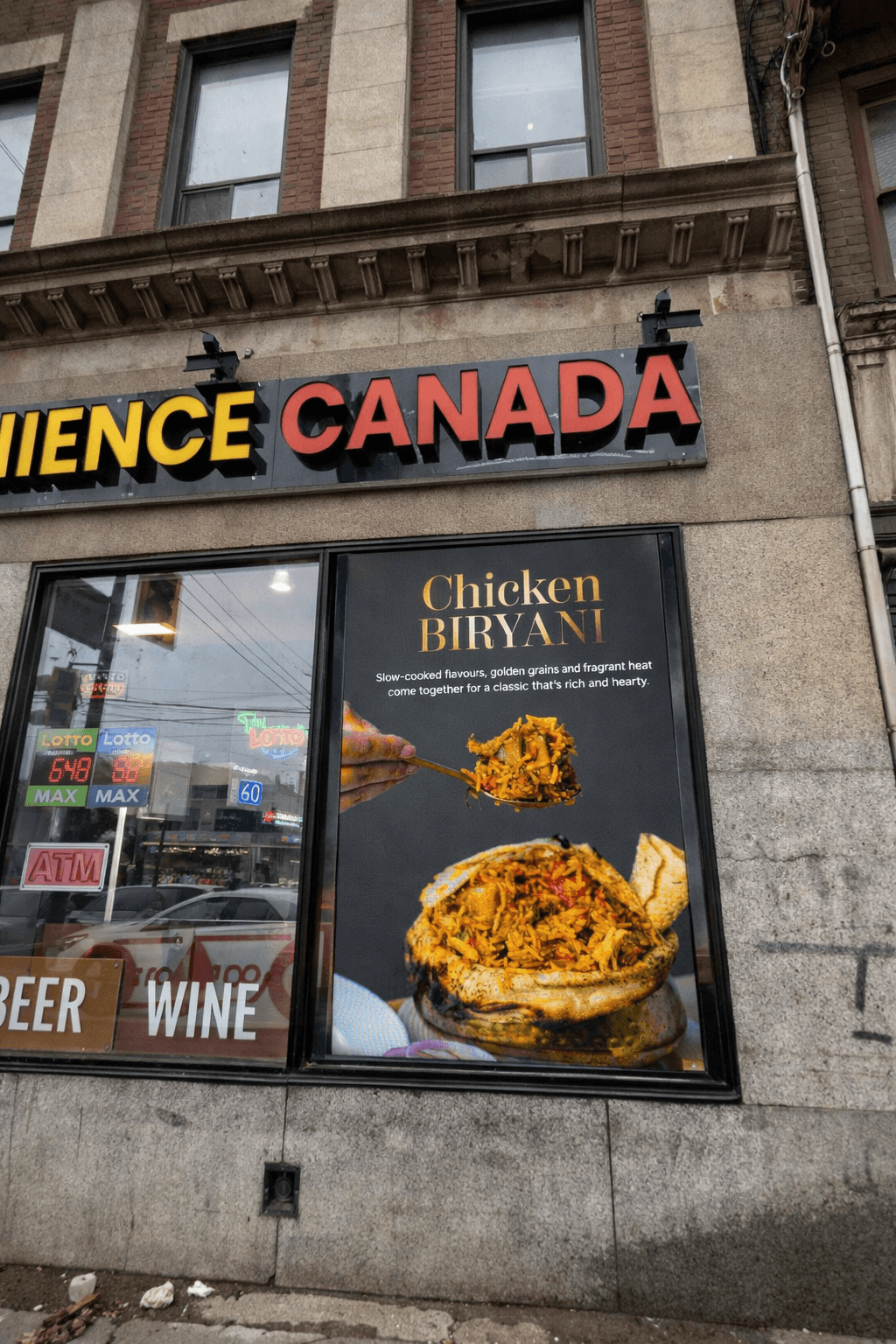
Toronto has more restaurants per capita than almost any other city in North America. On a single block in Kensington Market, King West, or Little Italy, a hungry customer has ten choices within a two-minute walk.
The restaurants filling tables every night are not necessarily the ones with the best food. They are the ones that stay top of mind. The ones whose name a customer remembers when they are standing on the street deciding where to eat.
That is an advertising problem. And in 2026, the Toronto restaurants solving it are not doing it with flyers, print ads, or even Instagram posts alone. They are combining digital screen advertising with smart online tactics to build the kind of local visibility that fills seats consistently, not just on weekends.
This is the complete breakdown of what actually works for restaurant advertising in Toronto right now.
Why Most Toronto Restaurants Struggle With Advertising
The honest answer is that most local restaurants advertise reactively. They boost an Instagram post when things are slow. They run a Google ad during a special event. They hand out flyers on the street for a week and then stop.
None of that builds a brand. It just generates noise.
The restaurants winning in Toronto right now are running a consistent, multi-channel presence that keeps their name in front of the right people at the right time. Not just when they need a boost, but every week, every month, compounding over time.
The good news is that doing this does not require a marketing agency or a massive budget. It requires the right channels and a plan to use them consistently.
The Toronto Restaurant Advertising Channels That Actually Work in 2026
1. Digital Screen Advertising (DOOH)
This is the most underused channel for Toronto restaurants right now, which means the early movers have a significant advantage.
Digital out-of-home (DOOH) advertising puts your restaurant's video content on high-traffic physical screens across Toronto. Think a 65-inch 4K display on Queen Street West running your lunch special at 11:30am, or a screen near Rogers Centre showing your happy hour promo to 30,000 people a month who walk past that location.
Here is why it works specifically for restaurants:
Timing is everything in restaurant advertising. A billboard seen at 11am by a hungry office worker on their way out for lunch is worth ten Instagram ads served at random times. Digital screens hit the right people at the right moment, in the right neighbourhood, without any targeting setup required.
Video sells food better than anything else. A 15-second clip of your signature dish, a full table on a Friday night, or your chef plating something beautiful stops people mid-stride in a way a static sign never will. Food is visual. Motion is irresistible. The combination is one of the most effective advertising tools a restaurant can run.
Your existing content works. The videos you are already posting on Instagram and TikTok play directly on HotCrowd's screens. No production budget. No agency. Just your existing content running on a busy Toronto street 24 hours a day.
HotCrowd currently operates screens on Queen Street West and Blue Jays Way near Rogers Centre, with new Toronto locations launching through 2026. For a restaurant in or near those corridors, a monthly screen campaign is one of the most cost-effective advertising buys available.
2. Google Business Profile (The Most Overlooked Tool)
Before you spend a dollar on paid advertising, your Google Business Profile needs to be complete and active. This is free and it is the single most important digital asset a Toronto restaurant owns.
Here is why: 46% of all restaurant website traffic comes from local searches like "restaurants near me" or "best Thai food Toronto." Those searches pull directly from Google Business Profiles. If your profile has outdated hours, no photos, and no recent reviews, you are losing those customers to the restaurant down the street whose profile is complete.
What a fully optimized Google Business Profile includes in 2026:
- Current hours including holiday and seasonal updates
- At least 20 high-quality food and interior photos
- A direct link to your online reservation or ordering system
- Weekly Google Posts highlighting specials, events, or seasonal menus
- Active review responses, both positive and negative
This costs nothing except 30 minutes to set up properly and 10 minutes a week to maintain.
3. Instagram and TikTok: Consistency Over Virality
Every Toronto restaurant has an Instagram account. Most of them post sporadically, use generic hashtags, and wonder why their follower count stagnates.
The restaurants building real local followings are not trying to go viral. They are posting consistently, three to five times a week, with content that makes people hungry and gives them a reason to walk in.
What works for Toronto restaurant content in 2026:
Food in motion. A static photo of a plate gets scrolled past. A short video of a burger being assembled, a cocktail being poured, or a pizza coming out of the oven stops the scroll. If you are posting photos and wondering why engagement is low, switch to video.
Behind the scenes. Toronto diners trust restaurants they feel they know. Your chef, your prep routine, your sourcing story, a 30-second clip of a Saturday morning kitchen setup. These posts build the connection that turns followers into regulars.
Local timing. Post your lunch specials at 10:30am. Post your weekend brunch content on Friday evening. Post your happy hour on Thursday afternoon. Timing your content to match when your audience is making food decisions dramatically increases conversion from views to visits.
Neighbourhood hashtags. Generic hashtags like #food or #toronto reach nobody useful. Neighbourhood-specific tags like #QueenWest, #KingStreetToronto, #LittleItaly, #Distillery or #TorontoFoodie reach the exact local audience you need.
4. Digital Screens and Social Media Working Together
The most effective Toronto restaurant advertising strategy in 2026 is not choosing between digital screens and social media. It is running both so they amplify each other.
The combination works like this: a potential customer walks past your HotCrowd screen on Queen Street West on a Tuesday afternoon and registers your restaurant's name and a dish they liked the look of. That evening they see your Instagram ad in their feed. By the second touchpoint they already recognize your brand. That recognition drives the reservation.
Studies show that combining physical DOOH advertising with a targeted social media presence lifts conversion rates by up to 40% compared to running social media alone. For a Toronto restaurant, that difference shows up directly in reservation volume and walk-in traffic.
5. Time-Sensitive Promotions on Digital Screens
This is the tactic most Toronto restaurants are not using but should be.
Digital screens are not just for brand awareness. They are the most powerful last-minute promotional tool available to a local restaurant. Here is how to use them:
Slow Tuesday lunch? Run a 2-hour promotion. Update your HotCrowd screen creative at 10:30am with a "Lunch for Two" deal running until 1pm. Anyone walking past your screen location between 11am and 1pm sees a time-limited offer in the exact window they are deciding where to eat.
New menu launch. New seasonal dish? New chef's special? Run a one-week screen campaign the week of the launch. Every person who walks past your screen location is aware of the new item before they even look at your menu.
Event nights. Live music, trivia nights, special tastings. A 5-day screen campaign leading up to an event consistently outperforms social media posts for generating in-person attendance, because it reaches people who are already physically in your neighbourhood.
What Toronto Restaurants Should Stop Spending Money On
Being direct about this saves you money immediately.
Flyers and print menus dropped around the neighbourhood generate almost no measurable return for the cost of design and printing. The conversion rate from a flyer to a restaurant visit is near zero for most Toronto neighbourhoods in 2026. That budget is better spent on one week of digital screen time.
Boosting Instagram posts without a strategy is the most common waste in restaurant marketing. A boosted post without a clear call to action, defined audience, and a reason to visit generates impressions, not customers. If you are going to spend on Instagram ads, use them with a specific offer, a defined neighbourhood audience, and a direct link to your reservation page.
Yelp advertising has a declining return for most Toronto restaurants. Your Google Business Profile drives far more reservation intent at zero cost.
The Restaurant Advertising Stack That Works in Toronto in 2026
Here is the simple, practical combination that fills seats without a marketing agency:
Foundation (free, set up once): Complete Google Business Profile. Active Instagram and TikTok accounts posting three times a week minimum.
Awareness (monthly, ongoing): One HotCrowd digital screen in your neighbourhood or nearest high-traffic Toronto corridor running a rotating reel of your best dishes, specials, and atmosphere.
Conversion (monthly, targeted): A small Instagram ad budget targeting a 3km radius around your restaurant, running your best-performing organic content as a paid post with a reservation link.
This stack covers the full customer journey from "never heard of them" to "regular." And it does it without an agency, without a production budget, and at a fraction of what Toronto restaurants currently waste on print and flyer advertising.
How HotCrowd Works for Toronto Restaurants
Getting your restaurant on a HotCrowd digital screen in Toronto takes three steps:
Step 1: Pick your screen location. Choose the Toronto corridor that matches your target customer, your neighbourhood, or the area you want to drive traffic from.
Step 2: Upload your video. Your existing Instagram Reels, TikTok clips, or a simple phone video of your best dishes. Bold visuals, minimal text, one clear message. That is all you need.
Step 3: Go live. Your restaurant's content is running on a Toronto digital screen within 24 hours of confirmation. No agency meeting. No minimum contract. No reprinting fees when you want to update your creative.
View available Toronto screen locations for restaurants here
Start your restaurant campaign today
Frequently Asked Questions
How much does restaurant advertising cost in Toronto? Costs vary significantly by channel. Google Business Profile optimization is free. Social media content costs only your time. HotCrowd digital screen advertising starts at rates far below traditional OOH options like transit shelter ads, with no long-term contracts and no agency fees. Contact us directly for current Toronto screen pricing.
What type of advertising works best for Toronto restaurants? The combination of a complete Google Business Profile, consistent social media content, and digital screen advertising in your neighbourhood delivers the strongest results for Toronto restaurants in 2026. Each channel serves a different stage of the customer decision, from discovery to conversion.
How do I advertise a new restaurant opening in Toronto? For a new opening, digital screen advertising in the surrounding neighbourhood is one of the fastest ways to build local awareness before you open. Run a teaser campaign in the two weeks before opening with your concept, cuisine, and opening date. Combine with a strong Google Business Profile setup and Instagram presence from day one.
Do I need a video production company for restaurant digital screen ads? No. Your existing food videos, behind-the-scenes clips, and dish photography edited into a simple 15-second reel is all you need for a HotCrowd screen campaign. The content you are already creating for social media works perfectly.
How long should a Toronto restaurant run a digital screen campaign? Minimum four weeks for meaningful local brand recognition. Monthly rolling campaigns compound over time as neighbourhood residents see your brand repeatedly. For promotional campaigns tied to specific events or menu launches, a one to two week campaign is highly effective.
HotCrowd is Toronto's digital out-of-home advertising platform. We connect local restaurants and businesses with high-traffic digital screen locations across Ontario. No agency fees, no long-term contracts, no production required. Start advertising at hotcrowdadvertising.com.