How to Advertise on Digital Screens in Toronto (2026 Guide)
Elvis Vesly - Tue May 26 2026
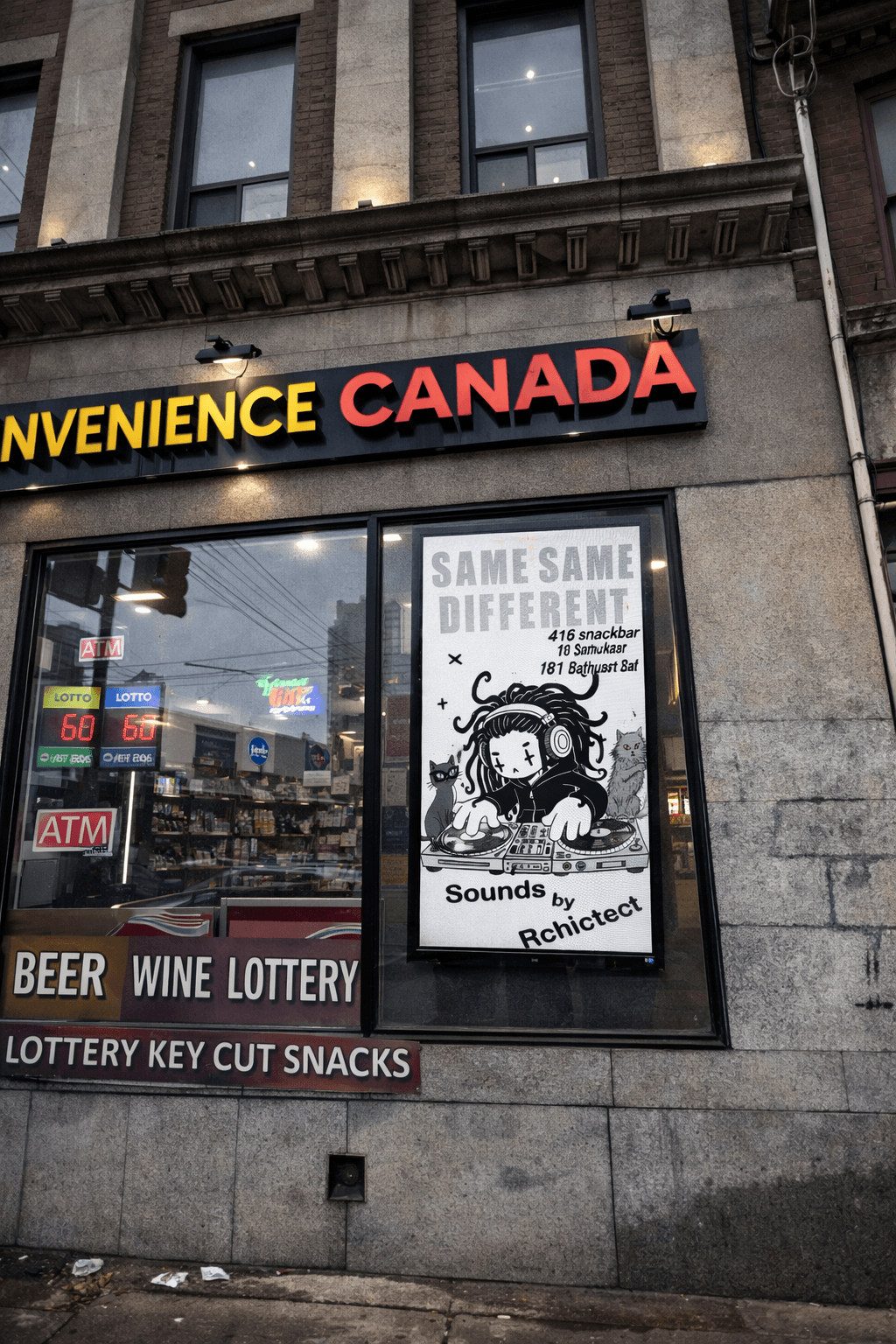
Every Ontario business owner running ads in 2026 is staring at the same two choices: keep pouring budget into social media ads that are getting harder to make work, or try something different.
Digital out-of-home (DOOH) advertising — video ads on digital screens in real physical locations — has been growing fast across Ontario and Canada. But how does it actually compare to Meta and Google ads? Is it worth it for a small or medium-sized Ontario business? And what does the right strategy look like in 2026?
This is the honest, practical breakdown.
First: What's Actually Changed in Ontario's Advertising Landscape in 2026?
Before comparing the two channels, it's worth acknowledging what's shifted.
Social media advertising is more expensive and less effective per dollar than it was three years ago. CPMs (cost per 1,000 impressions) on Meta platforms rose significantly through 2023–2025. Organic reach on business pages is near-zero. iOS privacy updates have degraded audience targeting precision. The result: Ontario businesses are spending more to reach fewer people with less accuracy.
Meanwhile, DOOH is growing. Canada's out-of-home advertising market grew by double digits in 2024–2025, driven primarily by digital screen expansion in Ontario's major cities and corridors. New platforms like HotCrowd have made digital screen advertising accessible to businesses that previously couldn't afford traditional billboard agencies.
This context matters because the comparison in 2026 is not the same comparison it would have been in 2021. The gap between what social ads deliver and what they cost has narrowed significantly.
Side-by-Side Comparison: DOOH vs. Social Media Ads
Reach and Audience
Social media ads: Targeted reach based on demographics, interests, behaviours, and device data. Highly specific — you can reach "Toronto women 28–45 interested in fitness." However, post-iOS 14, audience data quality has degraded. You're often paying for precision that's less precise than it used to be.
DOOH (digital screens): Location-based reach — everyone who passes a specific physical location. Less demographic filtering, but often more relevant than you'd think: a screen on Queen Street West targets an entirely different audience profile than a screen in a Scarborough retail corridor. For local Ontario businesses, geographic targeting is often more powerful than demographic targeting anyway.
Verdict: Depends on your goals. For demographic precision, social wins — in theory. For local geographic domination in a specific Ontario neighbourhood or corridor, DOOH wins clearly.
Attention and Recall
Social media ads: Average viewability is low. Most social video ads are watched for 2–3 seconds before being scrolled. Even ads that play fully are competing with an infinite content feed designed to constantly pull attention elsewhere. Ad recall from social media ads in the 24-hour window after exposure is typically 5–15%.
DOOH: Digital screen ads have no skip button, no scroll, no competing content. They play in environments where the viewer has nowhere else to direct their gaze — walking down a street, waiting at an intersection, passing a storefront. Industry research consistently shows DOOH delivers significantly higher unaided recall rates than social media ad formats.
A Nielsen study found that DOOH drives 2.5x higher recall compared to online video at equivalent spend. Outdoor Advertising Association of America data shows 46% of people who see a DOOH ad take some form of action afterward.
Verdict: DOOH wins clearly on attention and recall. You may reach fewer people per dollar, but the people you reach actually register what they saw.
Cost Per Impression
Social media ads (Ontario, 2026): Meta CPMs in Canada currently range from $8 to $35+ per 1,000 impressions depending on audience, season, and competition. Q4 rates are dramatically higher. Retargeting campaigns are cheapest; broad awareness is most expensive.
DOOH (HotCrowd screens, Toronto): A high-traffic Toronto location running 30,000+ monthly impressions works out to a CPM that competes directly with mid-range social advertising — and with the recall advantage factored in, the effective CPM (cost per actual remembered impression) can be significantly lower.
Verdict: At face value, social ads often show a lower CPM. Factoring in actual recall and attention quality, DOOH is competitive to superior for awareness-level advertising.
Flexibility and Speed
Social media ads: Can launch, edit, or kill campaigns in minutes. Creative can be A/B tested rapidly. Budget adjustments happen in real-time. This is genuinely where social advertising wins.
DOOH: HotCrowd campaigns launch within 24 hours. Creative can be updated any time from your dashboard. Campaign durations are flexible — daily, weekly, or monthly. This is a massive improvement over legacy OOH (traditional billboards), but social media is still faster and more granular.
Verdict: Social wins on speed and granularity. DOOH with HotCrowd is far more flexible than traditional outdoor, but can't match social's real-time optimization capabilities.
Trust and Brand Perception
This is the factor that most Ontario business owners haven't considered: physical presence signals legitimacy.
When a potential customer sees your brand on a digital screen on Queen Street West, their unconscious perception of your business is different than if they see a Facebook ad. Physical advertising carries a psychological signal of scale and credibility even when it's actually more affordable than the social ads sitting next to it in your budget.
For local Ontario businesses building brand trust - realtors, restaurants, clinics, retailers, service businesses - this perception gap is significant. It's the same reason some businesses still print brochures: physical presence feels different to the consumer.
Verdict: DOOH wins on brand trust and perceived legitimacy signals. Particularly important for service businesses in Ontario where trust is the primary conversion driver.
Trackability
Social media ads: Strong built-in analytics — impressions, clicks, conversions, ROAS, frequency, demographic breakdowns. Even with post-iOS data quality degradation, social platforms provide more measurable attribution than almost any other channel.
DOOH: Impression estimates are based on foot traffic data for the screen location. HotCrowd campaigns include QR code tracking, which connects physical exposure to digital actions — giving you measurable proof of engagement. However, it's not as granular as social media conversion tracking.
Verdict: Social wins on tracking depth. DOOH with QR tracking is more measurable than legacy billboards, but attribution is inherently less precise.
The Real Answer: They're Designed to Work Together
Here's the honest conclusion that most comparison articles won't give you: the question isn't DOOH OR social. It's how to use them together.
The brands seeing the best returns in Ontario in 2026 are running what marketers call an omnichannel local strategy:
- DOOH for awareness and trust — build name recognition in a specific Toronto or Ontario neighbourhood through street-level digital screen presence
- Social media for conversion — retarget the same geographic audience online with offer-specific ads
The result: by the time a potential customer sees your social media ad, they've already registered your brand on the street. Recognition creates trust. Trust drives conversion. The combination lifts your social media ad performance while the digital screen builds the brand equity that makes every future marketing dollar more effective.
This is the strategy large brands have always used — national TV for awareness, digital ads for conversion. HotCrowd makes the same playbook accessible to Ontario small and medium businesses.
What This Means for Your 2026 Advertising Strategy
If you're an Ontario business allocating your 2026 ad budget, here's the practical framework:
If your goal is local brand recognition and community trust: Allocate to DOOH first. A consistent digital screen presence in your neighbourhood builds faster, deeper local brand equity than any social budget at similar spend levels.
If your goal is direct response and immediate conversions: Social media still delivers faster, more measurable results for bottom-funnel campaigns. Keep it in the mix.
If your goal is sustainable growth: Run both. Use HotCrowd screens for top-of-funnel awareness in your Toronto or Ontario target area. Run tightly targeted social ads for conversion. Let the channels amplify each other.
What HotCrowd's Toronto Screens Offer Ontario Businesses
HotCrowd operates a growing network of high-traffic digital screens across Toronto — including Queen Street West, Blue Jays Way near Rogers Centre, and new 2026 locations in Yorkville and beyond.
For Ontario businesses ready to move beyond social-only advertising:
- Flexible campaigns — no long-term contracts, daily/weekly/monthly options
- No production required — your existing social media content plays directly on screen
- QR code tracking — connect physical impressions to measurable digital actions
- Self-serve platform — no agency, no long lead times, no gatekeeping
View Toronto screen locations and book your campaign →
See all HotCrowd advertising options for Ontario businesses →
Quick-Answer FAQ
Is DOOH advertising worth it for small businesses in Ontario?
Yes — specifically for local brand recognition and community trust-building. HotCrowd's pricing makes digital screen advertising accessible to businesses that could never have afforded traditional OOH agencies.
Can I run DOOH and social media ads at the same time?
Not only can you — you should. The combination consistently outperforms either channel alone. Your social media ROI improves when your audience already recognizes your brand from physical screens.
How quickly can I launch a DOOH campaign in Toronto?
With HotCrowd, your ad is live on a Toronto digital screen within 24 hours of confirmation. No agency lead time.
Do I need a special video for digital screens?
No. Your Instagram Reels or TikTok videos play directly on HotCrowd's screens. Bold, simple, high-contrast content performs best.
What's the minimum budget for digital screen advertising in Ontario?
HotCrowd offers flexible entry points without traditional agency minimums. Contact us for current pricing →
HotCrowd is Ontario's self-serve digital out-of-home advertising platform — connecting local businesses with high-traffic digital screen locations across Toronto and Canada. No agency fees. No minimum commitments. Just your content, in the real world. hotcrowdadvertising.com